Scalp and Hair Analysis in Berlin-Mitte

Hair & Scalp Health
Most people do not arrive with a question about their scalp. They arrive with an image: the shower drain, a parting that looks wider in a photograph taken from above than it does in memory, a remark at the hairdresser. It is rarely loud and it is almost always private.
The scalp is skin. It goes dry, it goes oily, it tightens, it reacts to colour, to heat, to hormones and to stress. It deserves the same attention as a face and receives it almost nowhere. So we treat it as skin: read it first, understand it, then care for it at the pace the skin sets.
A hair and scalp analysis answers a simple question: what does this scalp need, and what does this hair need? Density, hair calibre and the condition of the scalp are documented and stay comparable over the years, in your personal hair profile. None of it can be forced; it can be raised, gently.
We sell no packages for that and take no prepayments. What brings someone back should be the comparison rather than a balance. The method steps back. The person steps forward.
What we do is measure and compare over time. We do not diagnose. Where something belongs in medical hands we say so on the day we see it. Not later, and not in passing. That sentence is not a limit on the work. It is the ground it stands on.
One room. One person. The door closes. For many guests that is the reason they come at all.
Scalp analysis in Berlin-Mitte
This page does not begin with a device. It begins with an order: look, then understand, then care. What is recorded on the first day becomes the basis of comparison for every visit after it.
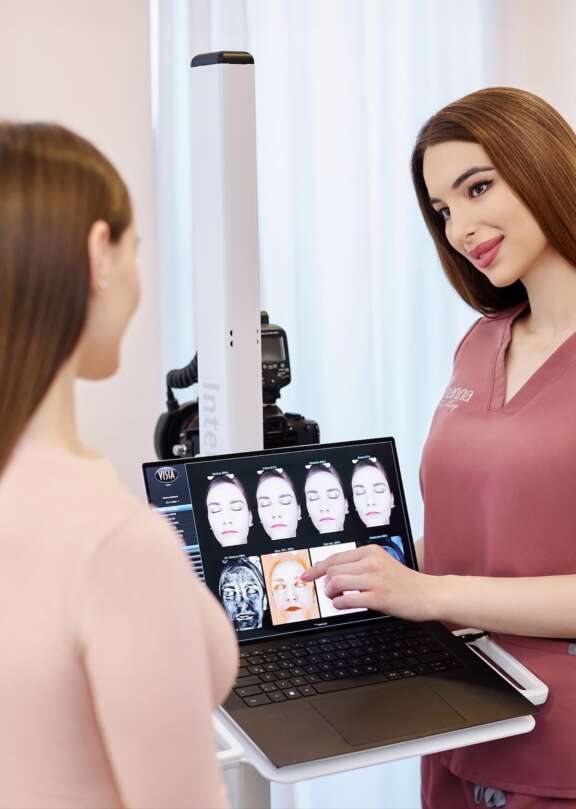
The capture is made on the Canfield D2, running the HairMetrix® workflow. Nothing is shaved, nothing is dyed, and the capture cannot be felt. It returns hairs per square centimetre, cumulative hair width and the ratio of terminal to vellus hairs, with hairs per follicular unit, average hair width in micrometres and inter-follicular distance alongside.
A single reading is a starting point, not a verdict. Trichoscopy tends to undercount density against a biopsy, and normal values differ between hair types. That is why the second visit matters more than the first, and why visible change takes three to six months.
What happens during a scalp analysis?
You sit upright, the hair stays dry and uncut. A small camera is placed at several points, usually the parting, the crown and the temples. It takes minutes rather than an hour. Afterwards we look at the images together.
We never open with a number. Context comes first: which region we are looking at, and why a single value says very little. The difference from a camera at a hairdresser is not the picture. It is what happens next: the readings are kept, taken again at the next visit and compared. What we measure is yours. You can have the images and the readings whenever you want them, held encrypted, only with your written consent, and erased on request. The plan that follows from them we go through together in the room. It comes to you in writing afterwards.
What can you do if your hair looks thinner?
Look before guessing. The impression in the mirror and the measured change are two different things, and the only reliable way to tell them apart is two readings months apart. That is the real reason for the analysis.
After that it is about the ground hair grows in. We work on the scalp itself: with light where it is irritated, with controlled warmth where the tissue is tight, with a routine that reduces rather than adds. We promise no outcome, and nobody should. We record what we see, we follow the scalp across the years, and where more than care is needed, that belongs with a physician early.
What does a scalp analysis cost in Berlin?
Analysis with Inanna Hair360® costs 100 €. That covers the imaging, the reading of the images together, and what follows from it. If you book a treatment afterwards, the ten-minute orientation at the start of every visit comes with it. The duration on the cards below is hands-on time. The booking time is ten minutes longer.
Why is my scalp irritated after colouring?
Colour and bleach work through alkaline carriers that open the outer layer of the skin for a while. On a sensitive scalp that leaves a burning, a pulling or a redness behind, because the barrier needs time to close again. It is the most common reason people come to us.
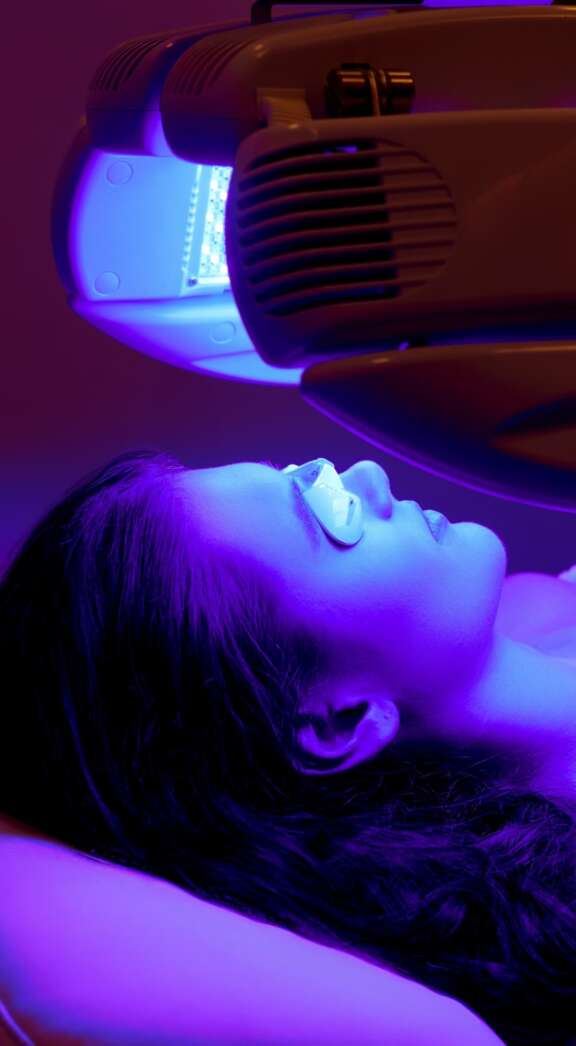
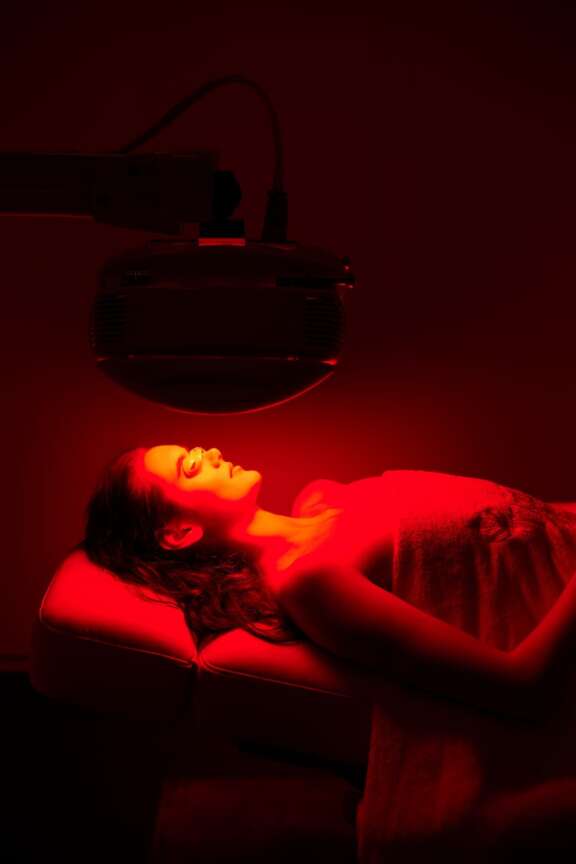
In the days after, what helps is whatever takes work away from the skin. Lukewarm water, mild cleansing, no hood dryer, no scrubs. We work with Dermalux® light and the Biologique Recherche® scalp ampoules, which need no basin. An irritation settles within that time; an allergic reaction tends to spread, itches more and can run past the hairline. Only a medical practice can tell the two apart with certainty, and open areas, crusting or weeping are the point at which that is the right route. Before the next colour appointment, a patch test and two to three days since the last wash both help.
What helps an oily scalp?
An oily scalp is rarely a cleansing problem and usually a rhythm problem. Frequent hot washing with harsh surfactants removes sebum reliably, and the skin answers with more of it. The way out almost always runs through less intensity rather than more.
We look first at the follicular openings. Sebum, residue and scaling are distinguishable in an image and not in a mirror. The routine is then reduced rather than added to: a mild cleanser and a light, non-occlusive preparation. Where the skin is irritated, light is added. Smell is the part of this that is least talked about and weighs most. It comes from oxidised sebum and the skin flora rather than from any failure of hygiene, and washing more often usually makes it worse. If it persists once the routine has changed, or if heavy scaling and persistent itching arrive with it, that belongs with a physician before we apply anything.
Why does my scalp feel tight?
Tightness across the head rarely comes from the skin alone. More often it comes from the layer beneath it: the galea, the broad sheet of tendon connecting the frontal, temporal and occipital muscles, which answers jaw clenching, screen posture and held tension with pull.
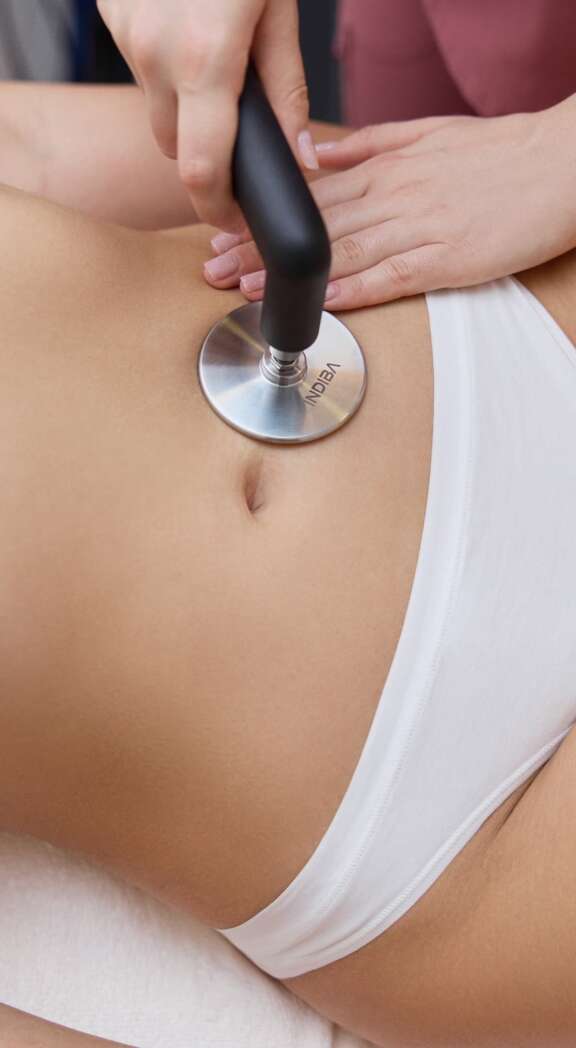
Dryness of the skin often sits alongside it and sharpens the feeling, but is seldom the whole cause. So we work on both: on the barrier with moisture and quiet, and on the tension with the hands. INDIBA® adds controlled warmth where it helps. The tissue becomes more yielding and the manual work more comfortable.
What do you do for tension in the head and neck?
We work dry. No water, no basin, no product in the hair, seated or reclined and fully clothed. The work is on the galea and on the frontal, temporal and occipital muscles, with the neck, the shoulders and the jaw alongside.
The head is charged ground for many people. Hence the order: we begin off the scalp, move inward, and ask first. Pressure can be changed at any moment and you can stop at any moment.
Does the scalp change during menopause?
The scalp does change during menopause, and it is rarely discussed. As oestrogen falls, sebum production and the moisture barrier of the scalp both shift, and many women describe a burning, an itching or a scaling in that period that was not there before.
Disturbed sleep and a higher baseline tension often arrive with it, which sharpens everything felt at the head. We measure more often in this phase, because a comparison across two or three visits says more than any single reading. Anything hormonal belongs in medical hands, and we say so rather than working around it.
What does it mean when the scalp hurts or tingles?
Altered sensation on the scalp frequently appears with no visible change to the skin at all. That means a burning, a tingling, a numbness or a soreness at the roots. That does not make it less real, and it is the reason people with it are so often not taken seriously.
We do not treat it and we do not name it. We can do two things that help: look at whether the skin itself is showing anything, and offer quiet manual work where held tension is part of it. For persistent or one-sided symptoms, dermatological or neurological assessment is the right route, and it comes first.
What do you offer for the scalp?
Three things, and none of them replaces medical treatment. Dermalux® works with light, contact-free, where the scalp is irritated. INDIBA® brings controlled warmth into the scalp and neck where the tissue is tight. Cellbooster® Haar delivers nutrients directly into the scalp and is the most intensive of the three. It carries amino acids, vitamins and minerals in non-crosslinked hyaluronic acid.
Which of them applies is decided after the reading rather than before it. Some scalps need nothing more than a quieter routine and time, and when that is the case we say so.
When does this belong with a physician rather than with us?
Whenever something has to be named, examined or prescribed. Open or weeping areas, crusting, a defined bald patch, a scarring change, sudden heavy loss, a finding that shifts quickly: that belongs in a practice, and delay there is not an inconvenience but can cost follicles.
On the day we see something, we tell you what we saw, and we do not tell you what it means. That boundary is why working alongside medical practices in Berlin is possible at all.
The house behind the care
Anyone arriving with a concern about hair or scalp has usually tried a good deal already. And has been reassured at least once without anyone having looked. We reverse the order: look first, speak after. Ten minutes of orientation open every visit, not only the first, because skin and hair differ on any given day. If you are unsure this is the right route, begin with the Inanna Consult®.
The work is done by the Meisterinnen des Hauses, the masters of the house. Their training comes from manual work on the face, from the Institut Takumi Finch and the Kobido® line. The same schooling in pressure, pace and attention carries the work on the head and neck. Technology amplifies what hands begin. Hands give the result its elegance.
The imaging comes from Canfield Scientific in Parsippany, New Jersey, founded by Douglas C. Canfield. The company is regarded as the imaging standard in international hair research. It works to ISO 13485, ISO 9001 and ISO 27001. The D-series descends from the German firm VISIOMED AG, which Canfield acquired in October 2018. We therefore work with the successor platform, from the company that bought the predecessor. That is corporate history rather than a claim about effect.
The HairMetrix® workflow needs nothing shaved at the capture site. The value of the readings is that they are standardised and repeatable, and therefore comparable across months. They are not a finding and we do not read them as one.
Each of the three instruments we work with on the scalp has its own origin. Dermalux® comes from Aesthetic Technology in Warrington. Louise Taylor and Huw Anthony founded the company in 2012. They built the device out of the clinic they ran together.
INDIBA® was founded in Barcelona in 1983 by José Calbet Benach. He gave his working life to therapeutic radiofrequency and died in 2018. The 448 kilohertz has been the company's signature ever since.
Cellbooster® comes from Suisselle in Yverdon-les-Bains, Canton Vaud, established there since 2010. Research, manufacture and training sit on one site. The patented CHAC technology alters hyaluronic acid so that it carries nutrients.
Biologique Recherche® supplies the care for scalp and hair. The house was founded by the biologist Yvan Allouche and the physiotherapist Josette Allouche. Lotion P50 was first formulated in 1970. It treats the scalp methodically as skin, which is why the range belongs here. In rooms without a water connection that is the practical difference.
Inanna Wellness was named Germany's best day spa by the World Spa Awards in 2024 and 2025. The house is the only CIDESCO-certified one in Berlin, and was portrayed in Vogue Italia in 2025.
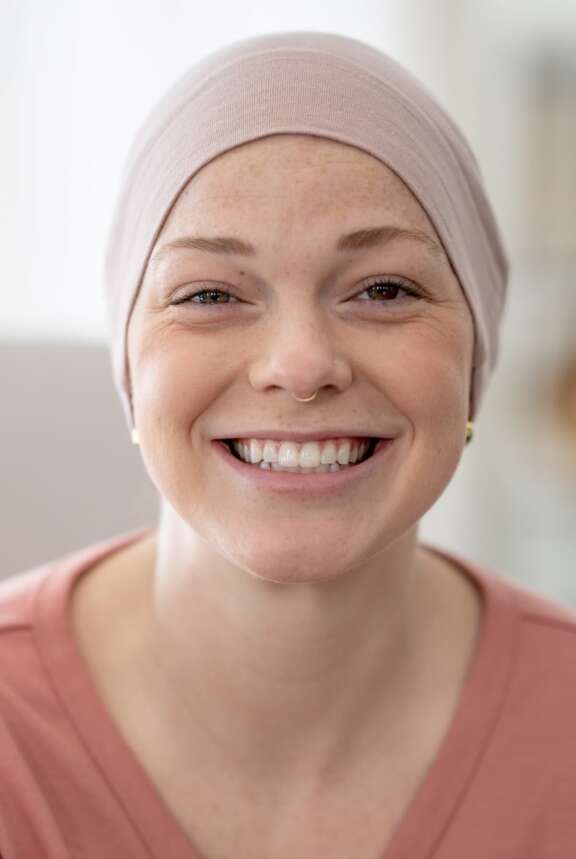
Inanna Wellness draws the boundary of this work deliberately. We do not name a condition, we do not examine and we do not prescribe. Anything that looks like it needs to be goes to a medical practice, and it goes with the image we took. One room, one person, the door closes: for guests in oncology treatment, for women who cover their hair, and for anyone who has never let another person near their head, that is the precondition.
Hair and scalp work here is supportive well-being care. It does not replace medical assessment. In pregnancy and after birth the route runs through MamiSpa®. During and after oncology treatment it runs through OncoSpa®. Anyone looking for the manual work on the head alongside the face will find it in the Kobido® facial massage. For anything further: Inanna Consult® or Contact.
Treatments